
Finding the right deck builder in Monmouth County takes more than comparing price tags. Monmouth’s mix of coastal towns, inland municipalities, and HOA neighborhoods each adds variables that an unprepared contractor will miss. This guide from Deck Crafters walks you through the specific questions, credentials, and red flags that matter when vetting deck builders in Monmouth County before anything is signed.
Most homeowners approach this by price. That is understandable, but price is a weak filter when two quotes cover different framing specs, footing types, and permit coverage. A deck builder in Monmouth County who knows this market includes those details upfront. One who does not may cost you more in the long run. Custom deck builders operating here need to understand local code, permit offices, and coastal building requirements. This guide gives you the tools to tell the difference.
Why Hiring Deck Contractors in Monmouth County Beats a General Contractor
Monmouth County covers a wide range of building conditions. A deck in Marlboro sits on stable inland soil with standard township requirements. A deck in Rumson or Sea Bright involves salt air, sandy soil, and potential CAFRA (Coastal Area Facility Review Act) oversight from the NJDEP. Those are not the same project.
General contractors who offer decks alongside kitchens and bathrooms might not have the local knowledge these conditions demand. Local deck contractors who build only decks work through Monmouth’s permit offices regularly and develop site-specific knowledge a generalist cannot match. Experienced local deck builders are also familiar with local inspection offices, which makes permit coordination smoother. When decks are the only trade a builder works in, every project receives full focus.
12 Questions to Ask Before You Sign a Monmouth Deck Contract
Ask these questions at every estimate. Pay attention to how each contractor answers. Confident, specific answers signal experience. Vague responses and pressure tactics do not.
Are You a Deck Specialist or a General Contractor With Deck Capability?
Ask directly: What percentage of your annual revenue comes from deck construction? A generalist who fits decks between remodels and other trades carries a different level of focused experience than someone who builds decks every day.
How Many Decks Did You Build in Monmouth County Last Year?
Volume in this specific market reveals real familiarity. A contractor who completed 15 to 20 decks here last year knows the local permit offices and site conditions firsthand.
Are You Certified With Fiberon or Wolf?
Fiberon Certified Installers and Wolf Pro Builders have completed product-specific training covering installation requirements and warranty activation. Without that certification, the manufacturer’s warranty on your decking may not transfer to you correctly.
What’s Your Framing Spec Under Composite?
Composite decking only performs as well as the frame underneath it. Ask for the joist spacing, lumber grade, and blocking details. Fiberon specifies a maximum of 16-inch on-center spacing for standard (perpendicular) installations and 12-inch spacing for diagonal patterns. Confirm they are using ground-contact-rated pressure-treated lumber where the framing sits near or touches the ground. A contractor who cannot give you those numbers is worth noting.
Do You Provide a 3D Rendering Before I Commit?
A 3D rendering lets you see the deck before you order a board. It confirms railing height, stair placement, and how the structure connects to the house. Skipping this step leaves room for the finished project to differ from what you pictured.
What Hardware Are You Specifying?
Hardware matters, especially near the coast. Ask what fasteners and structural connectors they plan to use, the coating or material grade, and why. Stainless steel or hot-dipped galvanized connectors rated for coastal/salt-air exposure resist corrosion far better than standard galvanized hardware. Focus on the environment’s performance rating rather than any single brand name.
Do You Handle Permits and HOA Submissions In-House?
A contractor who tells you to pull your own permit is raising a concern. Permit responsibility belongs with the licensed contractor. In Monmouth County, HOA submissions and township permits run on separate tracks. A contractor who manages both keeps the project moving.
What’s Your Craftsmanship Warranty?
Manufacturer warranties cover the decking and railing products. They do not cover the labor or the structure itself. Ask what the contractor provides in writing for their own work. A verbal answer is not a warranty.
Can I See Local References From the Past 12 Months?
Recent Monmouth County references carry more weight than older ones from other markets. A reliable deck builder in Monmouth County, NJ, will have current customers willing to speak directly about their experience.
Do You Handle Structural Engineering Coordination?
Multi-level decks, elevated structures, and coastal lots can require a licensed engineer’s stamp before a permit is issued. Ask whether the contractor handles that coordination or whether it falls to you.
Are You Built for Coastal Conditions?
Shore-area projects require hardware rated for salt-air exposure, sometimes different footing solutions, and familiarity with CAFRA requirements. Ask specifically how the contractor accounts for coastal conditions in their material and hardware selections.
What’s Your Pricing Transparency Policy?
A written, itemized quote is the minimum standard. It should list the decking product, framing lumber grade, hardware brand, footing type, and permit fees. “Starting at” pricing without line-item details is not a quote. It is an opening number with room for costs to grow.
Credentials That Actually Mean Something in Monmouth County
Every professional involved in deck building in Monmouth County, NJ, should be able to produce these before a contract is signed.
- Fiberon Certified Installer: Contractors who have completed Fiberon’s product training and meet the installation standards that activate manufacturer warranties correctly. Without this credential, your coverage may be limited or void.
- Wolf Pro Builder: Contractors recognized by Wolf for their experience with Wolf Decking and Wolf Railing products. This designation confirms that the installer knows the requirements for keeping those warranties intact.
- NJ Home Improvement Contractor License: A state-issued license required by law for any contractor performing home improvement work in New Jersey. Verify it at the NJ Division of Consumer Affairs website before signing anything.
- General Liability and Workers’ Compensation Insurance: Both are required. Liability coverage protects your property, and workers’ comp protects you if someone is injured on site. Ask for current certificates, not verbal assurances.
Monmouth County Red Flags
Watch for these warning signs before you commit to deck builders in Monmouth County, NJ.
- Cash-Only Deposits: Legitimate deck builders in Monmouth County accept checks or electronic payment. Cash-only requests make transactions harder to document and recover from if problems arise.
- Verbal-Only Warranties: A warranty not written into the contract is not enforceable. Get every warranty, material, and labor documented in the signed agreement before work begins.
- No Site Visit Before Quoting: Soil conditions, grade changes, and equipment access all affect the project scope. A quote issued without seeing the property is built on assumptions.
- “You Handle the Permit”: Permit responsibility lies with the licensed contractor. Pushing it onto the homeowner raises serious questions about license status or local knowledge.
- Composite Quotes That Don’t Specify Framing Material: Framing accounts for a significant portion of both cost and structural performance. A quote without this detail cannot be fairly compared to one that includes it.
- Pressure-Closing Tactics: Solid contractors do not pressure you to sign before you are ready. Urgency language is a sales tactic, not a real constraint.
- “Starting At” Pricing With No Itemized Written Quote: Opening numbers without line-item detail leave significant room for costs to grow after you commit.
How to Compare Two Equal-Looking Monmouth Quotes
When comparing deck builders in Monmouth County, NJ, the details below the surface matter most. Two quotes at similar prices are not automatically the same scope of work.
Framing Material
Confirm the lumber species, grade, and treatment level. Ground-contact-rated pressure-treated lumber is required where framing contacts or sits near the ground. The grade and treatment directly affect long-term structural performance.
Footing Type
Most projects planned by a deck designer in Monmouth County use concrete piers extending below the 36-inch frost line. Coastal or sloped lots may require deeper footings or helical piles. The footing spec indicates whether the contractor accounted for your actual site conditions.
Joist Spacing
Standard composite installations call for a maximum of 16-inch on-center joist spacing. Diagonal or picture-frame patterns typically require 12 inches. Wider spacing reduces material cost but can lead to noticeable board flex over time.
Hardware Tier
Standard galvanized hardware and coastal-rated hardware are not interchangeable near the shore. Confirm that the quote specifies fasteners and structural connectors rated for salt-air exposure (typically stainless steel or properly rated hot-dipped galvanized). Ask for the coating type or material grade so you can compare apples to apples.
Warranty Terms
Compare the decking, railing, and labor warranties side by side. Certified installer status affects whether the full manufacturer warranty is activated. The same product can offer different levels of protection depending on who installs it.
Timeline Commitments
A verbal start date is not a contract commitment. Ask whether the written agreement includes a projected start date and a completion window. A contractor who builds permit lead time into the schedule is being realistic.
Monmouth Permit Reality
Nearly every new deck in Monmouth County requires a building permit and usually zoning approval. Under the New Jersey Uniform Construction Code, typical attached or elevated decks have no meaningful size or material exemptions. Very small freestanding low decks may be treated differently in some towns, but the safe assumption is that a permit is required. Working with a licensed deck builder in NJ means the contractor retains responsibility for permits. Each municipality has its own building department, and timelines vary by township.
Multi-level decks and elevated structures commonly trigger an engineering sign-off requirement before a permit is issued. Properties in CAFRA zones may also require NJDEP review. Many standard residential decks (no roof, no walls, no beach/dune disturbance) are often exempt from a full CAFRA permit, but waterfront or sensitive sites can still trigger NJDEP review, elevation requirements, or additional documentation. Salt-air hardware and proper footings remain important regardless.
HOA approval runs on its own track, separate from the township permit. Both must be complete before construction begins. A contractor who manages permits and coordinates with HOA documentation keeps the project on schedule.
Deck Cost Reality
Deck projects in Monmouth County vary based on size, materials, site conditions, and scope. Custom deck builders in this market cannot give an accurate number without seeing the property. A single-level composite build on a flat inland lot costs considerably less than a multi-level coastal structure with deck lighting and built-in features.
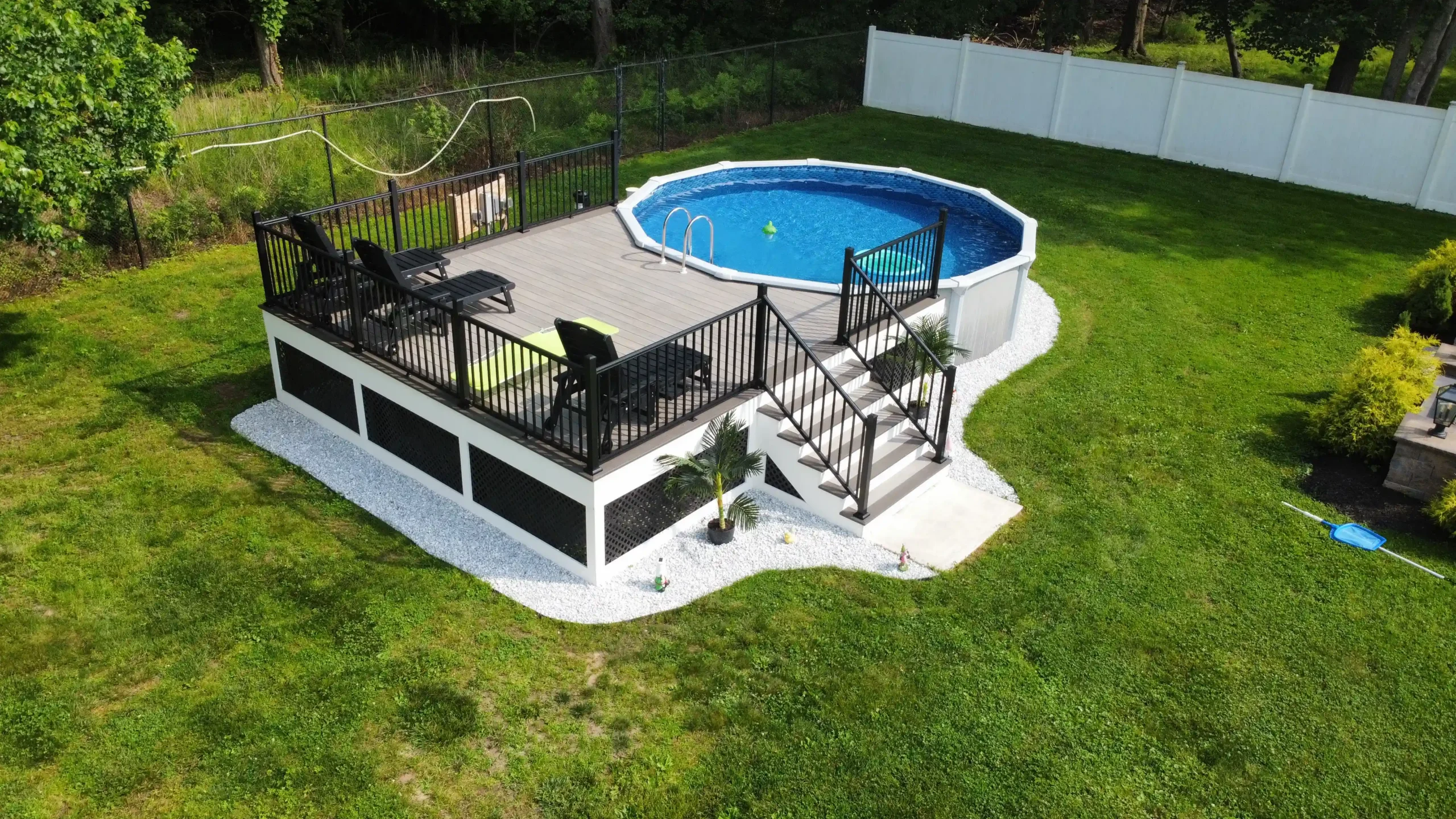
At Deck Crafters, you can see on our projects page that we have built deck and outdoor living projects at a variety of investment levels, ranging from around $30,000 for an above-ground pool deck project to around $175,000 for an expansive elevated deck with an outdoor kitchen on a patio. These numbers reflect the homeowners’ visions.
Projects with added complexity or coastal engineering requirements move higher. A contractor who gives you a firm price before visiting the site is working from assumptions.
Material warranties on quality composite decking run 25 to 50 years and are often transferable to the next homeowner. A well-built, properly documented deck is a real contributor to your property’s long-term value.
How Deck Crafters Approaches Monmouth County Projects
Deck Crafters is a deck-only company. No kitchens. No bathrooms. No patios. Every material decision and every permit conversation is built around one trade.
We are a Fiberon Certified Installer and a Wolf Pro Builder. The manufacturer’s warranties on your decking and railing are activated correctly. They are backed by an installer who knows the product requirements from field experience. We handle all permits and HOA submissions in-house, so you don’t have to chase paperwork. We provide 3D renderings before you commit, so the design is confirmed before materials are ordered. Pricing is all-inclusive and itemized in writing, with no surprise costs after the contract is signed.
Jayson Rybak founded Deck Crafters and is the person you work with directly, from the first call through the final walkthrough. He has built more than 100 decks over six years, with much of that work right here in Monmouth County. When you call Deck Crafters, you are talking to a deck builder in Monmouth County who is invested in this market and in the people he builds for. Reach out and let’s start with a conversation.
Monmouth County Deck Builder FAQs
How much does a deck cost in Monmouth County?
Custom composite decks in Monmouth County typically range from $40,000 to $60,000 for single-level builds. Multi-level structures and additional features increase the number. An accurate price requires a site visit and a written, itemized quote.
What permits do I need to build a deck in Marlboro, Freehold, or Rumson?
All three municipalities require a zoning review and a building permit before construction begins. Rumson and other coastal townships may also require NJDEP review for properties in CAFRA zones. Each town has its own building department, so processing timelines and documentation requirements differ.
Should I get multiple quotes for a deck in Monmouth County?
Two or three quotes are a reasonable approach. The key is to compare them on equal terms, using the same decking product, framing spec, footing type, and permit inclusions. A lower quote that uses inferior framing or excludes permit fees is not a real saving.
What’s a normal deposit amount for a Monmouth deck project?
A deposit of 25 to 33 percent of the total project cost is common in the NJ contractor market. Be cautious of any contractor requesting more than 50 percent upfront. Confirm the amount and what it covers in a signed contract before money changes hands.
How long does a typical Monmouth deck project take?
Active construction on most custom builds takes approximately two weeks. Permit processing adds time on the front end and varies by township. A contractor who builds permit lead time into the schedule is giving you a realistic picture of the full timeline.
Do coastal Monmouth decks require special materials?
Yes. Salt air accelerates corrosion on exposed metal. Stainless steel or hot-dipped galvanized fasteners and connectors rated for coastal exposure are the right choice for shore-area projects. Composite decking products also vary in their ability to withstand salt-air conditions.
Are all Monmouth HOAs required to approve deck plans?
HOA approval requirements vary by neighborhood. Not every Monmouth County property is subject to an HOA, and those that are operate under their own governing documents. If your property has an HOA, review the covenants before starting the permit process.
What’s the difference between a Fiberon Certified Installer and a Wolf Pro Builder?
Both are manufacturer-specific designations. A Fiberon Certified Installer has completed training on Fiberon’s products and knows the installation requirements that keep manufacturer warranties intact. A Wolf Pro Builder holds the same type of credential for Wolf Decking and Wolf Railing, and both matter because certified installers activate warranties correctly.
