
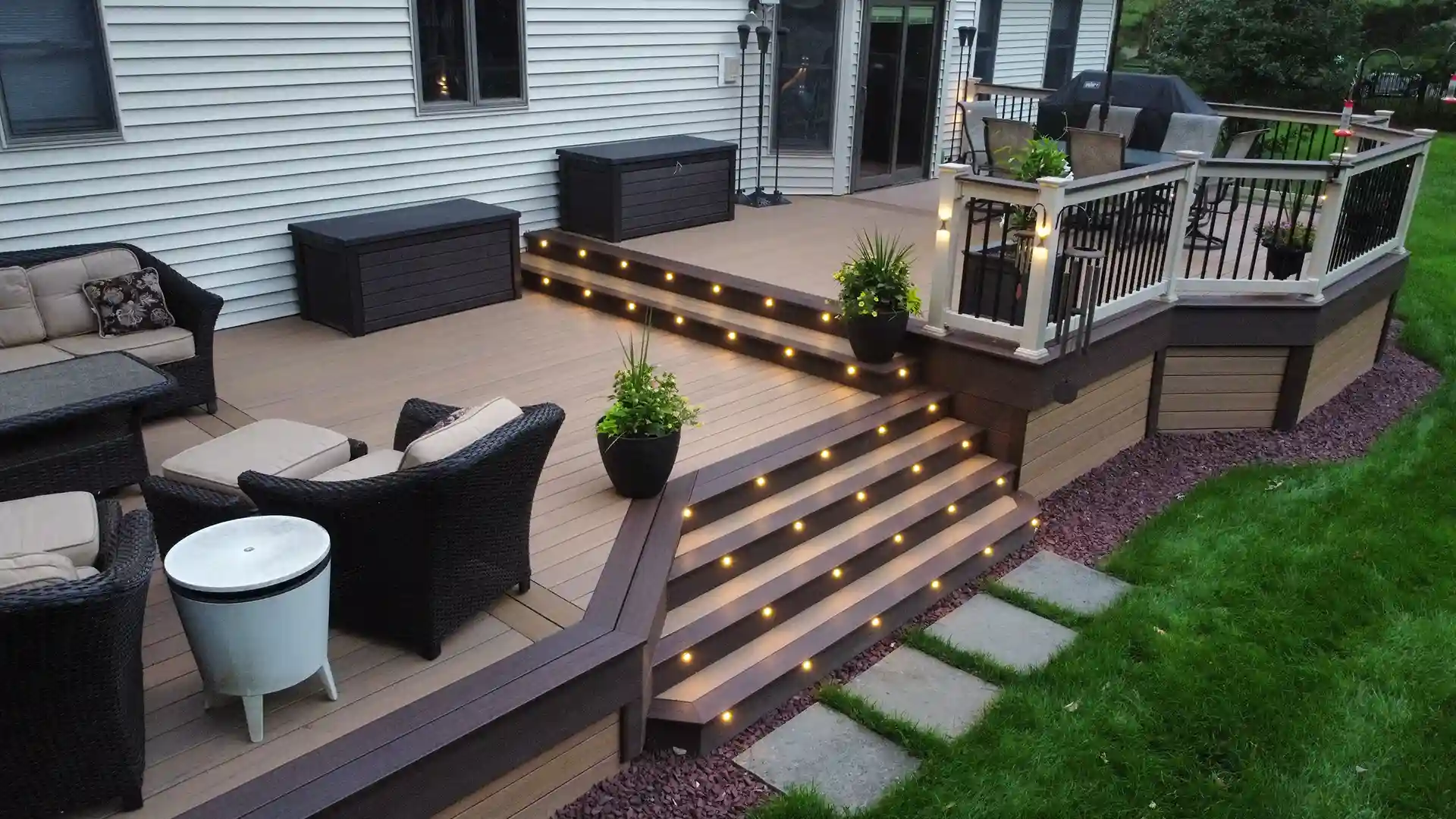
Looking for a quick answer? Read this: For most homeowners choosing a composite vs wood deck in Monmouth County, NJ, capped composite is the stronger choice because it costs more upfront, skips the regular staining and sealing wood needs, and stands up well to moisture.
A new deck should make your backyard easier to enjoy. Yet the material you choose can affect how much work that outdoor space demands for years to come.
If you’re considering a composite vs wood deck in Monmouth County, NJ, you’ll find plenty of opinions about which material is better. The real question is which one will work better for your property and how you use your outdoor space.
Pressure-treated wood generally costs less upfront, but it needs regular care to stay in good condition, which is part of the reason why we don’t build these wood decks. Composite decking costs more initially and eliminates routine staining and sealing, but is cost-effective over time. Premium hardwoods like Ipe offer natural character, although maintaining that appearance takes effort.
Your decision should account for what happens after installation. A deck that receives direct summer sun presents different concerns from one that stays shaded and damp.
Composite vs Wood Deck: What’s the Difference?
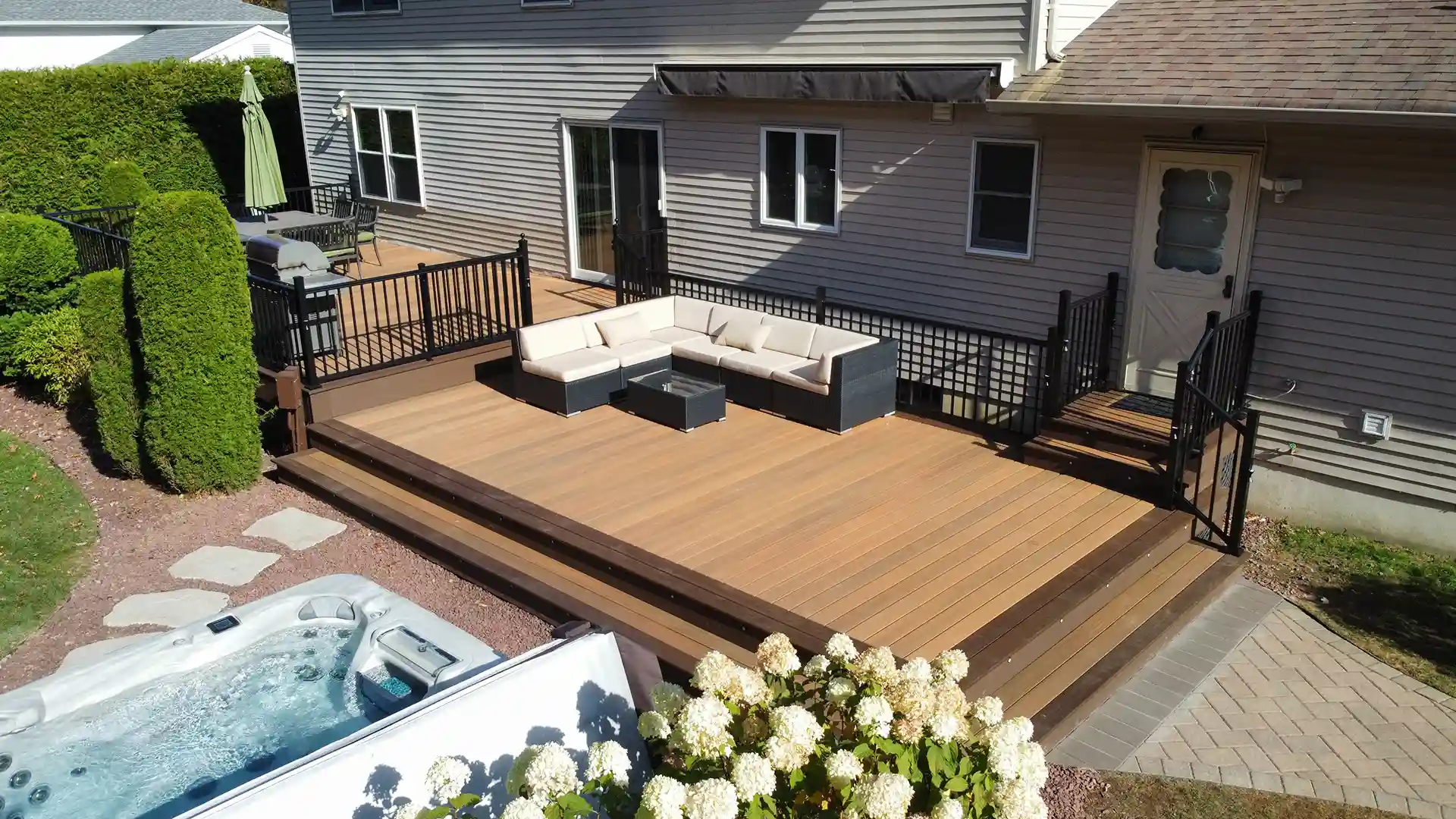
The main difference between composite and wood decking lies in how each material responds to moisture, sunlight, and daily wear.
Wood decking uses natural lumber. Pressure-treated pine remains a common choice for homeowners looking to keep initial costs down. The treatment helps resist insects and decay, but boards can still crack, splinter, or change shape as moisture content shifts. Over time, sun exposure can turn the boards gray, and mold or mildew can grow on the surface where the wood stays damp.
Composite decking combines wood fibers with plastic polymers. Many modern boards have a protective cap designed to resist staining, fading, and moisture.
PVC decking is another option you’ll encounter. Unlike wood-plastic composite, PVC contains no wood fibers. Wolf Serenity, for example, uses cellular PVC and is designed for low-maintenance outdoor use.
Here’s how the materials compare.
| Feature | Composite Decking | Pressure-Treated Wood |
|---|---|---|
| Initial cost | Generally higher | Generally lower |
| Routine care | Washing and inspections | Cleaning, periodic staining or sealing, and inspections |
| Moisture resistance | Strong with capped products | Depends on treatment and upkeep |
| Appearance | Wood-look colors and textures | Natural grain |
| Surface wear | Scratches may require board replacement | Many boards can be sanded |
| Splintering | No traditional wood splinters | Can develop splinters |
| Color | Designed to resist fading | Changes with weather exposure |
Composite Decking vs Wood Cost: Which Offers Better Value?
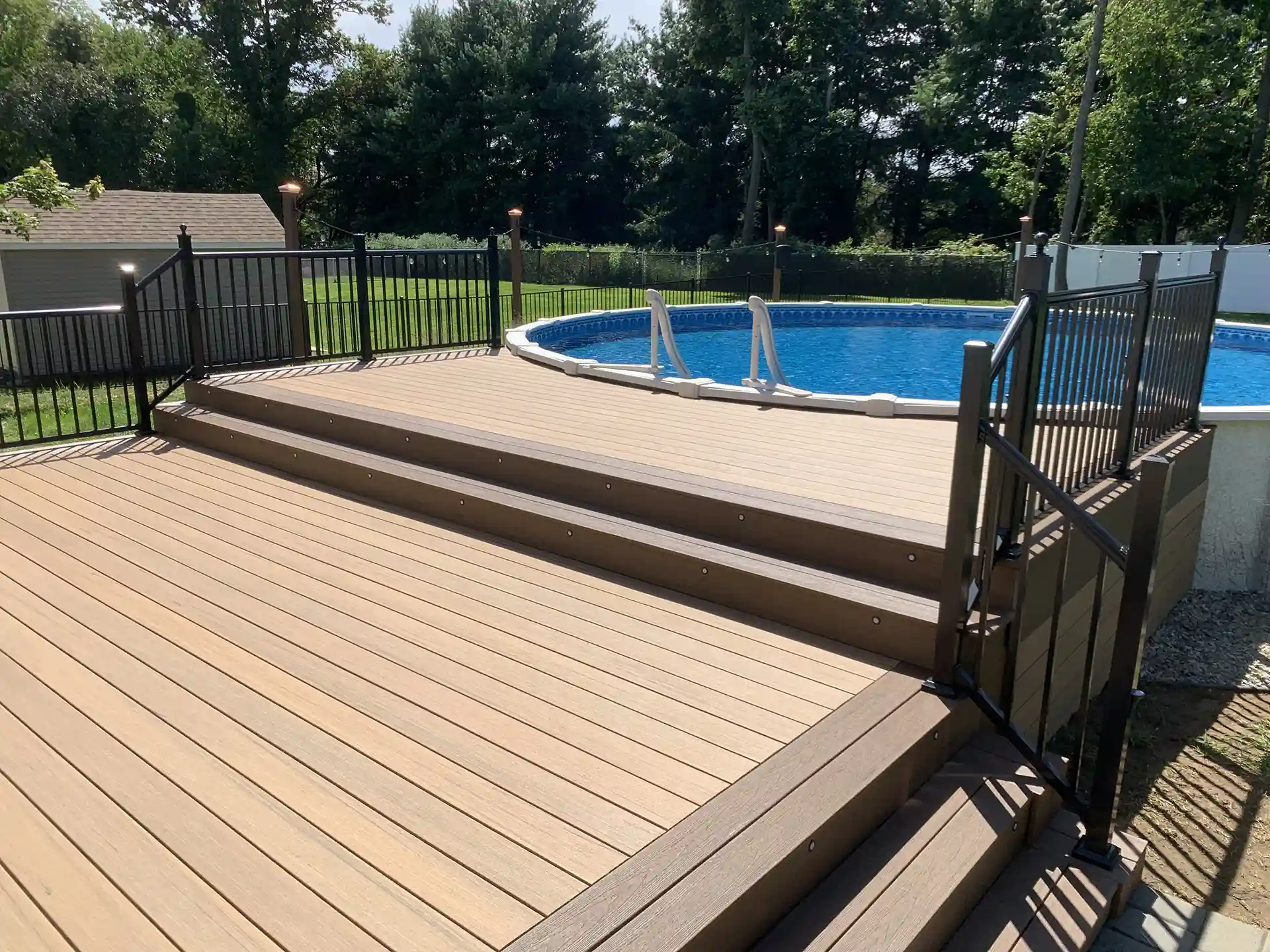
The composite decking vs wood cost comparison starts with the price of the boards. Pressure-treated lumber typically costs less than composite decking, while premium hardwoods such as Ipe can be more expensive than many manufactured boards.
The final installation price depends on much more than the surface material.
Why the Same Deck Size Doesn’t Mean the Same Price
Imagine two homeowners planning decks with identical dimensions.
One property has a nearly level backyard. The other slopes away from the house, requiring an elevated structure and stairs to reach the lawn.
The second deck may need more substantial framing and additional labor, regardless of which surface material the homeowner chooses.
Deck height and structural requirements influence the total cost. Board layout can also affect installation time. Picture-frame borders and other custom details require careful planning and support.
When comparing quotes, make sure each builder has priced the same work. A quote that excludes necessary construction details may look attractive until you add those costs.
Does Composite Decking Save Money Over Time?
Wood decking requires upkeep to preserve its appearance. Protective finishes wear down, especially where the surface receives strong sun or frequent moisture. Eventually, you may need to clean, prepare, and refinish the boards.
Composite eliminates recurring staining and sealing. Routine cleaning is still necessary, and damaged boards may still need attention.
When you weigh a composite vs wood deck in Monmouth County, consider who does the upkeep. A homeowner who handles wood maintenance personally may spend less money on upkeep than someone who hires a contractor. That difference affects whether composite’s higher purchase price pays off over time.
If you know you won’t keep up with wood maintenance, the lower initial price matters less.
What Are the Benefits of Composite Decking vs Wood?

The most useful benefits of composite decking vs wood involve the work required to preserve the surface and how the boards respond to everyday exposure.
Less Time Maintaining the Surface
Without staining or sealing, routine care means removing leaves and washing away dirt. In Monmouth County, spring pollen can leave a noticeable film on outdoor surfaces. A cleaning routine keeps composite boards looking better without the work involved in refinishing wood.
Stronger Resistance to Moisture
Wood absorbs water and releases it as conditions change. Repeated wetting and drying can contribute to cracking, cupping (boards curling upward at the edges), and splitting. Proper treatment and maintenance help protect the boards, but they don’t eliminate natural movement.
Modern capped composite decking resists moisture-related surface damage. The protective cap helps limit water exposure, making the material useful where rain and humidity are regular concerns.
What Is the Main Disadvantage of Composite Decking vs Wood?
The most common disadvantage of composite decking vs wood is the higher initial investment. However, we have talked about how composite/PVC decking can be more cost-effective over the lifespan of your deck.
How Hot Does Composite Decking Get in Summer?
Composite decking can become uncomfortable under bare feet in strong sunlight.
Surface temperatures depend on the product and its color, along with the surrounding conditions. Darker finishes often absorb more heat, although the difference varies by board.
Before choosing a dark finish, consider how the space will be used during July and August. Viewing samples outdoors helps you evaluate the appearance, while product-specific temperature information can inform your choice.
For an exposed backyard, shade may deserve a place in the original design. A pergola incorporated into the new deck can make a seating area more comfortable without changing the entire layout.
We can discuss with you what kinds of composite materials mitigate some of the heat for your particular project.
Can Composite Boards Be Repaired?
PVC and composite decking can scratch when heavy furniture or sharp objects move across the surface.
Natural wood often allows sanding and refinishing. Most capped composite products don’t support that approach because sanding can damage the protective outer layer.
What If You Want to Change the Color?
Natural wood can often be refinished with a different stain.
Composite decking comes with a manufactured finish that generally isn’t intended for conventional staining. That limits your ability to change its appearance later.
Choose a composite color you can live with beyond the first season. Compare samples against your siding in daylight and think about how the finish will look across the entire deck.
Wood Deck vs Composite Deck: Which Handles Monmouth County Weather Better?
The wood deck vs composite deck comparison becomes more useful when you consider where your house sits.
For a composite vs wood deck in Monmouth County, location shapes the decision. A home near the water may face salt exposure and frequent damp conditions. An inland property in Freehold or Marlboro may have a backyard shaded by mature trees. Both situations affect how a deck dries and how its materials weather.
Coastal Homes Need the Right Hardware
Corrosion of metal fasteners and structural connectors remains an important concern near the Jersey Shore. Salt air can accelerate deterioration of unsuitable hardware.
A premium decking surface won’t compensate for hardware not selected for the environment. For coastal properties, choose a fastening system suited to the site’s exposure conditions.
Shaded Yards Need Better Moisture Management
Trees can keep a deck comfortable during hot afternoons. They can also slow drying after rain.
Wet leaves and other debris may collect between boards. Organic buildup can support mildew growth and create slippery areas on either wood or composite surfaces.
For a shaded backyard, pay close attention to drainage and airflow beneath the deck. Those construction details can affect long-term performance more than a small difference between decking products.
Composite Deck Boards vs Wood: What Should You Know About Installation?
When comparing composite deck boards vs wood, consider how each material affects the structure beneath the finished surface.
Joists, the horizontal framing members beneath the deck, support the boards you walk on. Manufacturers specify joist spacing and approved fastening methods for their products. Spacing joists too far apart can allow excessive movement in the decking. Certain layouts, including diagonal boards and stair treads, may require additional support.
Composite boards also require appropriate gaps to accommodate expansion and contraction as temperatures change. Wood moves as its moisture content changes, so proper installation remains essential.
Fasteners also affect the finished surface. Hidden fastening systems can create clean lines, but they need to be compatible with the selected decking.
How Deck Design Changes the Result
Deck Crafters built a multi-level composite deck in Freehold using Fiberon Good Life Escapes decking in Bungalow.
The property overlooked a field and pond. A conventional elevated platform with extensive perimeter railing would have changed how the homeowners experienced that view.
The design used step-down levels to create usable outdoor space while preserving open sightlines. A pergola provided shade over part of the deck.
That example raises an important point for homeowners comparing decking materials: The surface you choose affects upkeep, while the design determines how well your deck works for your home.
Is Ipe Hardwood a Better Alternative to Composite Decking?
Ipe is a dense tropical hardwood valued for its natural grain and decay resistance. Without periodic treatment to preserve its original color, Ipe gradually weathers toward a silver-gray finish. Because of its density, Ipe also requires appropriate tools and fastening methods during installation.
Ipe can be worth the investment when its natural appearance matters and you’re comfortable caring for it. Homeowners who want a hardwood look with less routine work can compare wood-look composite and PVC boards, including colors designed to resemble tropical hardwoods.
Composite vs Wood Decking FAQs
Does composite decking last longer than wood?
Composite decking is designed to resist several common causes of wood deterioration. Many products come with long-term limited manufacturer warranties, though coverage varies. Wood lifespan depends on the species and how well it is installed and maintained. Neither material guarantees a particular service life.
Does a composite decking warranty cover the entire deck?
Manufacturer warranties generally apply to specified product defects or performance issues under defined conditions. They don’t automatically cover the deck’s framing or installation labor. Coverage and transfer rights vary, so review the warranty for the exact collection.
Does Deck Crafters install wood decks?
No. We don’t build wood decks, but we sometimes build with Ipe. We recommend building new decks with Fiberon composite decking and Wolf products, including its PVC decking.
What Would Make the Most Sense for Your Backyard?
If you’re deciding on a composite vs wood deck in Monmouth County, NJ, and the deck will see frequent use, capped composite is a strong starting choice. It avoids the recurring work of staining and sealing, and the surface handles moisture well when properly installed.
The most expensive mistake is choosing a material before understanding what your property demands. A builder should be able to explain how the decking will be supported, how water will drain, and what the selected product requires during installation.
Deck Crafters focuses on new custom decks, and I am directly involved in the process. We handle engineering plans and township permitting. If you’re still weighing a composite vs wood deck in Monmouth County, contact us to talk through your property, how you’ll use the space, and which decking material fits both.
