
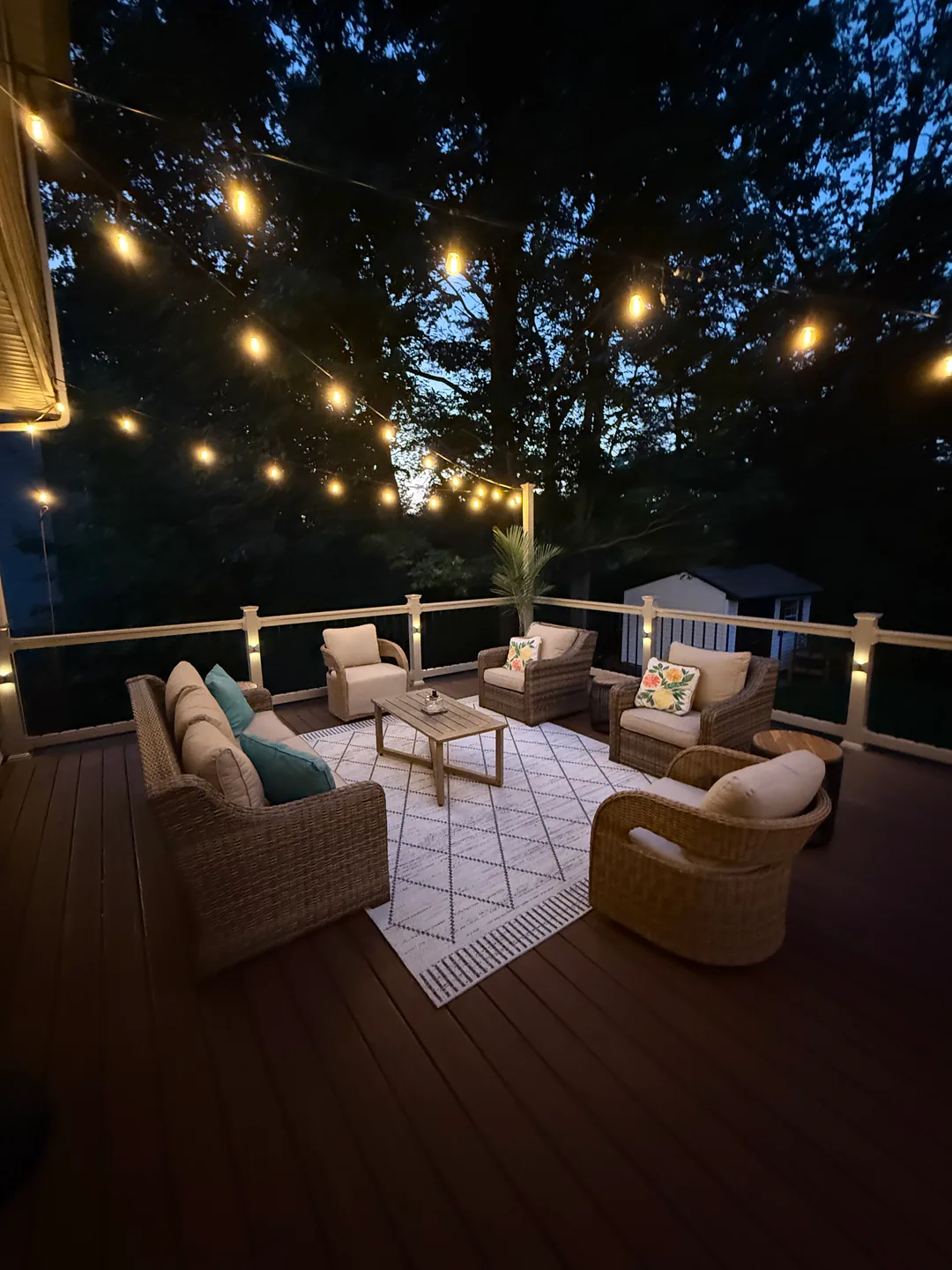
For most Monmouth County homes, capped composite or PVC is the most practical material for a framed pool deck. It handles repeated wet-dry cycles with less upkeep than wood, stays splinter-free, and can be detailed around stairs, railings, gates, seating areas, and changes in elevation. It is not automatically the coolest or least expensive surface, however. Color, sun exposure, substructure, drainage, hardware, and pool type all affect the right choice.
This guide compares the pool deck materials homeowners usually consider: pressure-treated wood, Ipe, composite, PVC, pavers, and concrete. A useful comparison includes the finish, framing or base, drainage, access, and long-term maintenance.
The Four Things a Monmouth Pool Deck Has to Survive
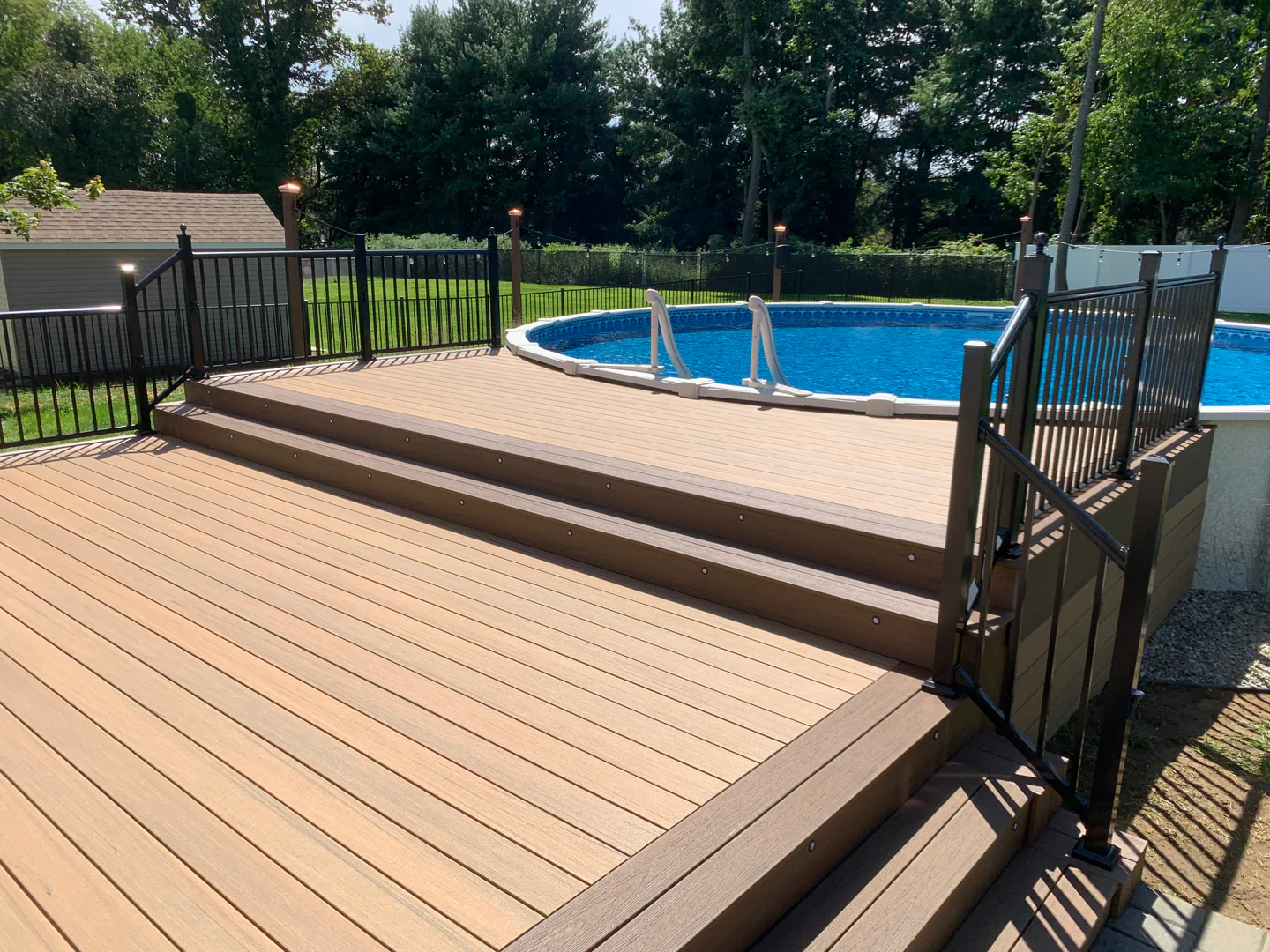
Monmouth County pool surrounds move through daily soaking and drying in summer, prolonged UV exposure, winter freezing, and, in Shore communities, airborne salt. Those conditions affect the surface and the concealed framing connections differently.
- Chlorinated or Salt-Treated Water: Splashing leaves water and dissolved chemicals on the surface several times a day from May through September. A capped surface limits absorption and simplifies rinsing, while unfinished wood can hold moisture and residue in its grain.
- Direct Summer Sun: Many pools sit in open parts of the yard with little shade. Every decking surface absorbs heat, and darker samples usually reach higher surface temperatures than lighter samples under the same exposure. Test colors in midday sun before making the final selection.
- Winter Freeze-Thaw Cycling: Water that reaches cracks, joints, or poorly drained areas can freeze and expand. Good drainage, correct board spacing, sound footings, and a properly prepared base matter whether the finished surface is decking, pavers, or concrete.
- Coastal Salt Air: In communities such as Rumson, Little Silver, Belmar, Interlaken, and Sea Bright, airborne chlorides can accelerate corrosion at hangers, screws, post bases, and railing connections. Hardware and fasteners must be specified for the site’s exposure.
Composite Decking and PVC Decking: The Default for Modern Pool Decks
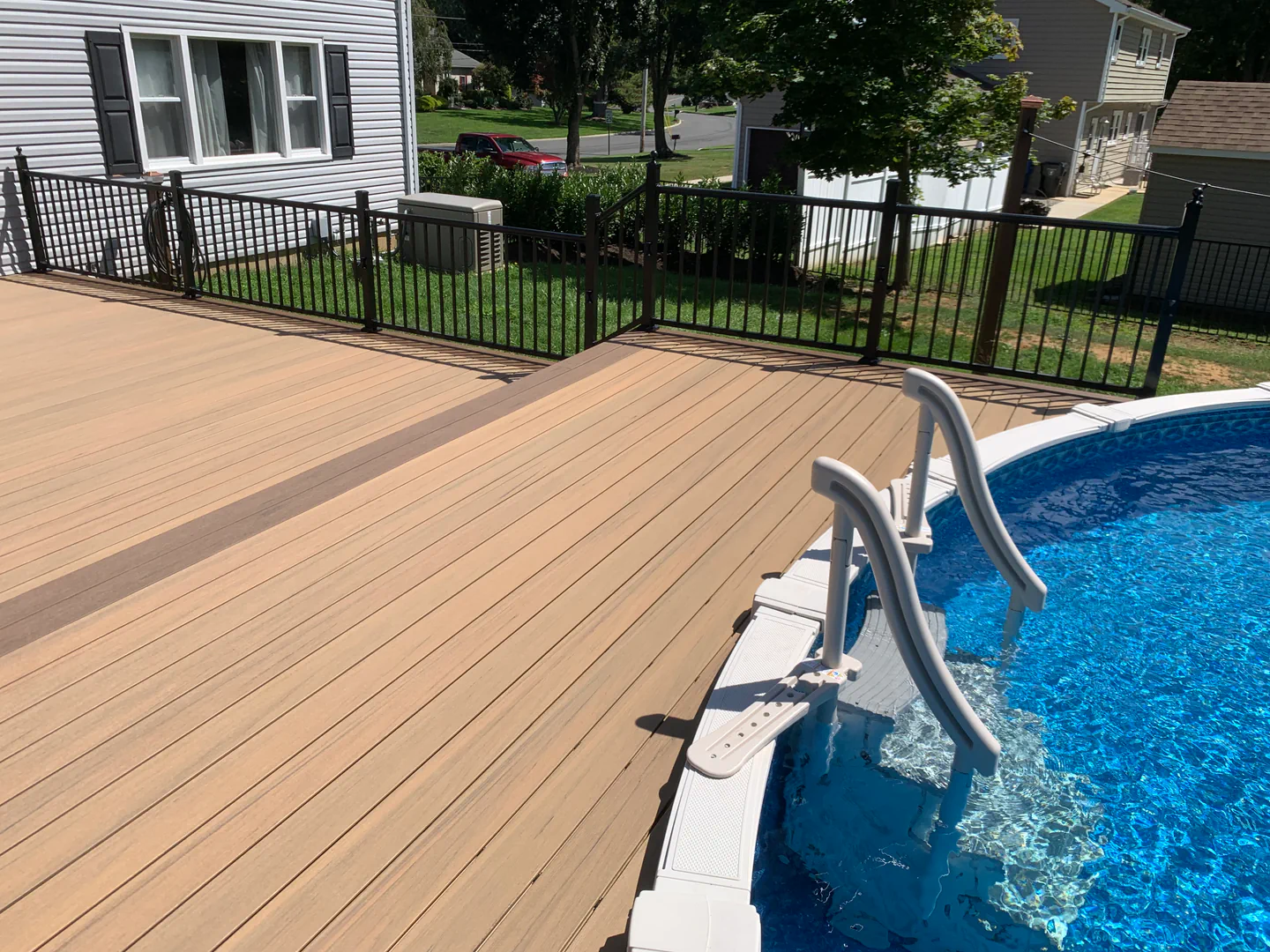
Composite and cellular PVC are different products, but both solve common pool-area problems better than untreated wood. Composite typically combines wood fiber and plastic beneath a protective cap. Cellular PVC contains no wood fiber and minimizes water absorption. Both provide a consistent, splinter-free walking surface and avoid the recurring staining and sealing schedule of a traditional wood pool deck.
These materials make the most sense when the project needs a framed structure: an elevated deck, a multi-level layout, integrated stairs, railings, lighting, privacy screening, or a connection between the house and pool. Pavers and concrete remain viable around many in-ground pools, but they are ground-based hardscape systems rather than direct substitutes for an elevated deck.
Why Composite Wins Most Pool Deck Builds
- Lower Routine Maintenance: Capped composite and PVC generally need periodic cleaning rather than sanding, staining, or sealing.
- Barefoot-Friendly Surface: The boards do not splinter. Heat still matters, so lighter samples should be compared in the actual sun when possible.
- Moisture Resistance: Properly installed capped products are designed for repeated outdoor exposure and are commonly used around pools.
- Flexible Design: A composite pool deck can incorporate picture-frame borders, contrasting stair treads, benches, lighting, privacy walls, and railing without changing to a separate surface system.
- Predictable Appearance: Homeowners can coordinate board colors, trim, railings, and nearby patio materials without waiting for wood to weather into an unknown tone.
Chlorine resistance should still be discussed product by product. Routine pool-water splash is different from allowing concentrated chemicals, sunscreen, pool covers, or rubber-backed items to sit on the boards. Rinsing the deck and following the manufacturer’s care instructions protects the finish.
The Brands We Install Around Pools
Deck Crafters installs Fiberon composite decking and Wolf PVC decking on pool and outdoor-living projects.
- Fiberon: Fiberon offers capped composite and PVC collections in multiple colors and price tiers. The cap layer supports stain and fade resistance, while the range of colors makes it easier to coordinate the pool deck design with the home, coping, or an existing patio.
- Wolf: Wolf Serenity is cellular PVC decking designed to minimize water absorption. Wolf identifies pool surrounds, docks, humid areas, and coastal regions as appropriate applications. Its care guidance also notes that all decking retains heat and that darker colors can become hotter in full sun.
As a Fiberon Certified Installer and Wolf Pro Builder, the company adheres to product-specific storage, spacing, fastening, and care requirements that affect performance and warranty coverage.
Why We Work with Composite and PVC Decking
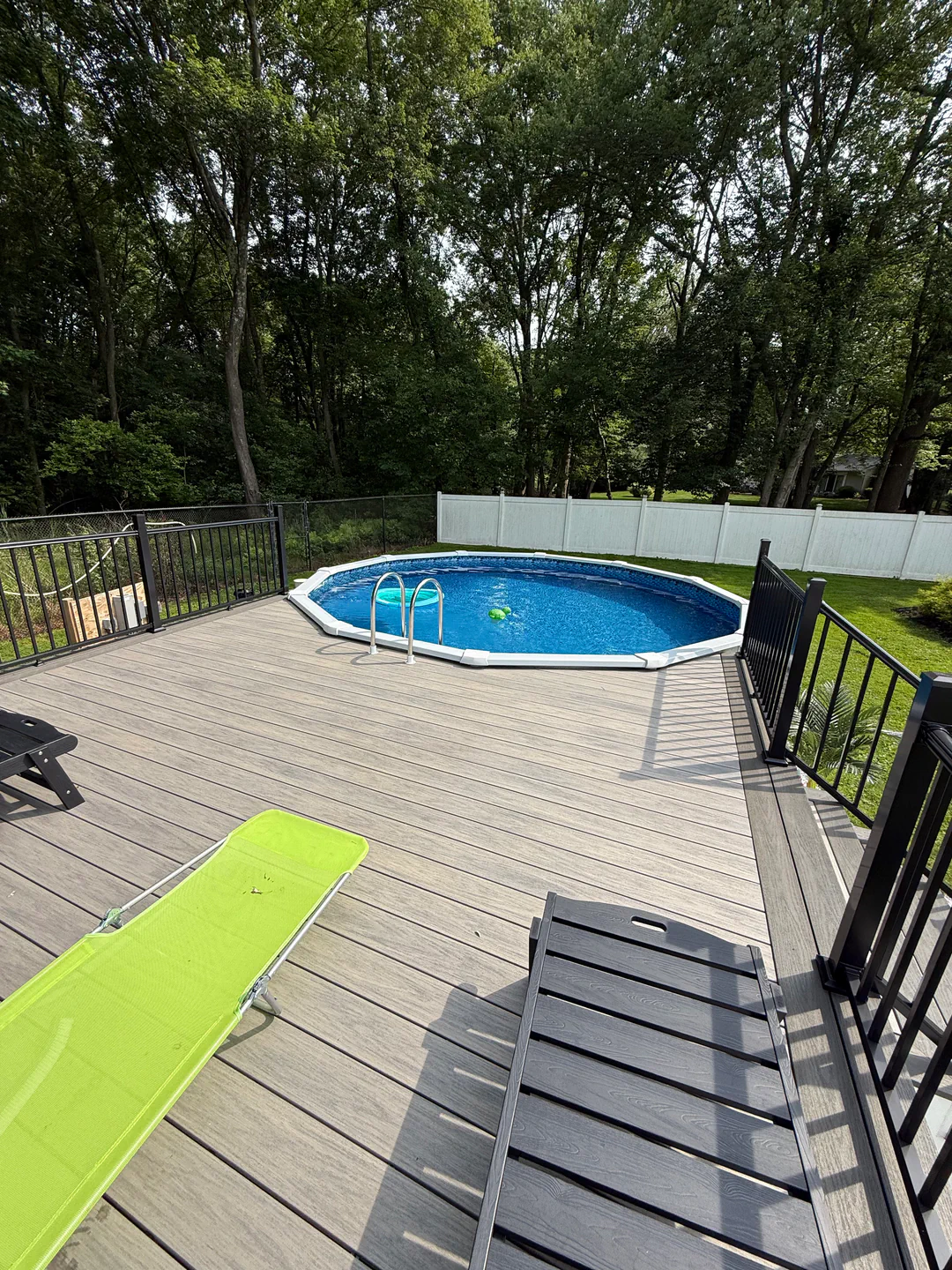
Deck Crafters focuses on framed deck systems, so the recommendation starts with the complete structure. The visible board is only one part of the build. Joist spacing, ventilation, drainage, fascia, fastening, railing connections, stair geometry, and corrosion-resistant hardware all influence how the pool deck performs.
Pressure-treated wood has the lowest material entry point, but it requires ongoing staining or sealing and can check, warp, or splinter as it weathers. Ipe is denser and more durable than pressure-treated lumber, with a premium natural appearance. It also costs more, requires experienced installation, and needs periodic oiling if the homeowner wants to preserve its original color rather than let it weather gray.
The board choice still has to match the framing. Around a pool, that means wider attention to joist spacing and airflow under the deck, fasteners and hangers rated for wet and coastal exposure, and stair and railing connections that will not trap water against the structure. Those details are written into the scope before the first board is ordered.
Above-Ground Pool Decks Are a Different Engineering Problem
An above-ground pool deck is not simply a platform placed beside the pool wall. The deck must meet the pool at a usable elevation while remaining structurally independent where required, controlling access, and leaving room for pool equipment and future maintenance. The top rail, liner, pump, filter, and winter cover all need to be considered before framing begins.
Substructure Considerations
- Pool Movement: The pool wall and deck structure may move differently. The design needs appropriate separation rather than relying on the pool to support the deck.
- Footings and Grade: Footing locations must work around the pool base, buried utilities, equipment lines, drainage, and changes in yard elevation.
- Service Access: Pumps, filters, valves, and liner components should remain reachable. Hiding equipment without planning access creates expensive maintenance problems.
- Safety and Circulation: Stairs, gates, railings, and walking clearances should guide people to the pool without creating narrow pinch points.
- Winter Operation: The layout must leave practical room for the pool cover and seasonal maintenance.
Common Above-Ground Configurations
A small landing and stair system provides controlled access with the least deck area. A side deck adds room for a few chairs and easier supervision. A partial wrap creates more circulation and lounge space without surrounding the entire pool. A full deck around an above-ground pool offers the most usable area but also adds framing, railing, footings, trim, and cost.
One useful local benchmark is Deck Crafters’ above-ground pool deck in Manalapan. That project used Wolf Serenity PVC decking, Keylink aluminum railing, PVC trim, and privacy lattice to bridge the height from the yard to the pool and create a level lounge area. The investment range was $27,000 to $32,000. That is a completed-project example, not a universal price for every above-ground design.
Coastal Monmouth Salt-Air Considerations
Near the Shore, the most important material choice may be the one homeowners never see. Ocean salt air, pool chemicals, moisture, and treated lumber can all accelerate corrosion in metal connectors and fasteners. Industry guidance notes that salt-related exposure can affect properties several miles inland, depending on weather and site conditions.
For a coastal pool deck, the builder should match the hardware specification to the actual exposure, use compatible connectors and fasteners, prevent water from collecting around connections, and avoid mixing metals in ways that increase corrosion risk. Surface boards marketed for moisture resistance cannot protect an underspecified substructure.
PVC is especially attractive for coastal pool applications because it contains no wood fiber and minimizes water absorption. Capped composite is also a strong option when installed to the manufacturer’s requirements. Natural wood can perform well, particularly Ipe, but the maintenance plan and fastener selection must match the environment.
How Deck Crafters Builds a Monmouth Pool Deck
- Start at the Property: The consultation covers the pool type, grade, house connection, access, drainage, equipment, expected furniture, traffic flow, and the way the family plans to use the space.
- Compare Complete Material Systems: Homeowners review board samples along with fascia, railing, lighting, fasteners, and trim. The goal is to compare how each option will work, not choose a color in isolation.
- Model the Layout: For projects that need detailed planning, 3D design helps test stair placement, lounge zones, circulation, and transitions to an existing patio or door.
- Define the Scope in Writing: The estimate identifies the major components so homeowners can see what is included and compare proposals on equal terms.
- Build Around Manufacturer Requirements: Product-specific joist spacing, gapping, fastening, ventilation, and care instructions are incorporated into the installation.
If you are comparing materials or trying to decide whether a framed deck or ground-level hardscape better fits the pool, start with the Deck Crafters pool deck service and schedule an in-home consultation.
Pool Deck Material FAQs
What is the best pool deck material for a Monmouth County home?
For most framed pool decks, capped composite or cellular PVC offers the best balance of moisture resistance, low maintenance, design flexibility, and barefoot comfort. PVC deserves extra consideration near the coast or where minimizing water absorption is a priority. The best choice still depends on sun exposure, color, elevation, budget, and whether the project is a deck or ground-level patio.
Does composite decking handle chlorine well?
Capped composite decking is commonly used around pools and generally handles routine chlorinated-water splashes when it is cleaned according to the manufacturer’s instructions. Rinse residue and clean spills promptly. Do not assume concentrated chemicals, sunscreen, rubber-backed mats, or a pool cover can remain on the surface indefinitely without discoloration or damage.
What is the best pool deck material for coastal Monmouth communities such as Rumson or Belmar?
Cellular PVC and capped composite are both strong surface choices. The more important coastal decision is specifying corrosion-resistant connectors, fasteners, and railing components for the site’s salt-air exposure. A moisture-resistant board installed over unsuitable hardware is not a complete coastal system.
How long does a composite pool deck last?
A properly installed composite pool deck can provide decades of service, and current manufacturer warranties often extend 25 to 50 years depending on the brand and collection. A warranty is not the same as a guaranteed service life. Framing, drainage, hardware, installation details, use, and maintenance determine the performance of the complete deck.
Are pavers or composite better around a pool?
Pavers are often a good fit for a ground-level surround beside an in-ground pool, especially when the homeowner wants to connect directly to a patio. Composite is better when the design needs elevation, framing, stairs, railings, integrated lighting, or a transition from the house to the pool. On some properties, the best pool deck design uses composite for the elevated structure and pavers for the lower patio.
Does Deck Crafters build above-ground pool decks?
Yes. Deck Crafters designs and builds above-ground pool decks, including access landings, side decks, lounge areas, and larger partial or full surrounds. The design accounts for pool height, equipment access, stairs, railing, gates, grade, and seasonal maintenance.
What pool deck material stays coolest in full sun?
No outdoor surface stays cool in uninterrupted summer sun. Light-colored concrete or pavers may feel cooler than many dark deck boards, but texture, color, moisture, and time of day all affect surface temperature. For composite or PVC, choose lighter colors, compare physical samples in direct sun, and plan shade where practical.
Can I match my new pool deck to my existing patio?
Usually, the goal should be coordination rather than an exact material match. Composite and PVC boards can repeat a patio’s warm or cool undertones, while borders, fascia, railing, and stair details can connect the two areas visually. A site-based pool deck builder can also align elevations and circulation so the surfaces feel like one outdoor space rather than two unrelated additions.
